.svg)
Despite the name, it rarely looks like an obvious leak. Most of the time, the issue develops quietly, hidden inside walls where no one can see it.
Leaky building syndrome.
Despite the name, it rarely looks like an obvious leak. Most of the time, the issue develops quietly, hidden inside walls where no one can see it. That is what makes it so easy to overlook and so important to understand.
As we move toward tighter, better-insulated homes, we are making big gains in comfort and energy performance. At the same time, though, we are changing how buildings deal with moisture. If that balance is not handled carefully, small issues can slowly build into bigger ones.
Years ago, houses were far from airtight. Walls had plenty of gaps, and air could move through them freely. From an efficiency standpoint, that was not ideal, but it meant any moisture that got in could usually dry out without causing damage.
Modern construction is very different. Insulation levels are higher, air leakage is reduced, and wall systems are more layered. Those changes are positive overall, but they also mean moisture needs a clear pathway to escape.
Without that pathway, it can linger inside the structure, and over time, that can lead to mould, decay, and performance issues in homes.
This is not just a theoretical risk. New Zealand experienced a major building crisis linked to moisture problems, with thousands of homes affected.
It was not caused by a single mistake. It came from a combination of materials, detailing, and a limited understanding of how moisture moves through buildings.
The key takeaway is not that we should avoid building high-performance homes. It is that we need to build them with a stronger focus on moisture management.
Water does not need a dramatic opening to create problems. Small imperfections are enough.
Wind-driven rain can push moisture into tiny gaps. Window and door junctions are common weak points in homes if they are not detailed properly. Even normal indoor activities produce moisture that can travel through building materials.
Cooking, showers, and everyday living all release humidity. Over time, that moisture moves toward cooler areas of the building and can condense within the wall system.
So the challenge is not just keeping rain out. It is also dealing with the moisture we generate ourselves.
There are a few fundamentals that make a big difference.
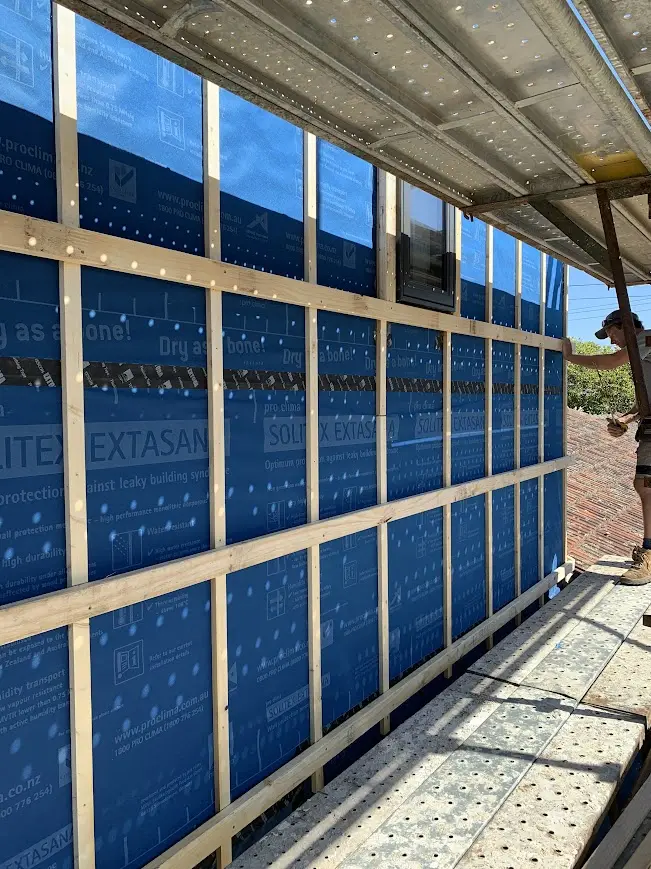
The first is a reliable weather resistant barrier (WRB) that stops water before it reaches the structure. That comes down to careful detailing and consistent installation.
The second is recognising that cladding is not the only line of defence to keep water out of homes. It is part of a layered approach, not the whole solution.
The third is allowing water vapour to pass through the wall in a controlled way. Vapour-permeable membranes help moisture escape without letting water enter.
The fourth is providing airflow behind the cladding. A ventilated cavity gives any trapped moisture a chance to dry out.
The final piece is controlling indoor humidity so that excessive moisture is not constantly being driven into the building envelope.
When these elements work together, the wall system becomes far more resilient.
Many people underestimate how much moisture daily life produces. A typical household can release several litres of water vapour every day.
If that moisture is not managed, it builds up and eventually migrates into the structure. That is why heat recovery ventilation systems (HRV’s) are becoming more common in well-sealed homes.
They bring in fresh air, regulate humidity, and help maintain a comfortable indoor environment. The benefit is not just protecting the building, but improving how the home feels to live in.
One reason this topic gets less attention is that the most important parts of the solution are hidden.
When people look at a finished home, they notice the design, the materials, and the finishes. What they cannot see are the membranes, flashings, and cavity systems that protect the structure over time.
Those unseen layers are what determine the resilience of the home and whether it performs well decades down the line.
Building well is about more than achieving a rating or meeting a minimum standard. It is about creating homes that remain durable, comfortable, and healthy over the long term.
When moisture is managed properly, the benefits show up in everyday living. The air feels fresher, temperatures remain more stable, and the building holds its quality for longer.
That is the real value of getting these details right.
If you are planning to build a new home or renovation, it is worth having a conversation about how moisture is handled.
Ask how the wall system deals with water if it gets past the cladding. Ask how the home allows moisture to dry. Ask how indoor humidity is controlled.
Clear answers to these questions show that a builder is thinking about home performance, not just construction.
As the industry evolves, there is a growing awareness of how important building science is to healthy home and long-term outcomes.
Energy efficiency, airtightness, and durability are not competing goals. When designed thoughtfully, they support each other.
The result is homes that are comfortable to live in today and remain reliable for many years to come.
And that is ultimately what we should be aiming for.


