.svg)
Learn what happens during the construction phase of your home, from site control and contracts to variations, progress payments, and handover.
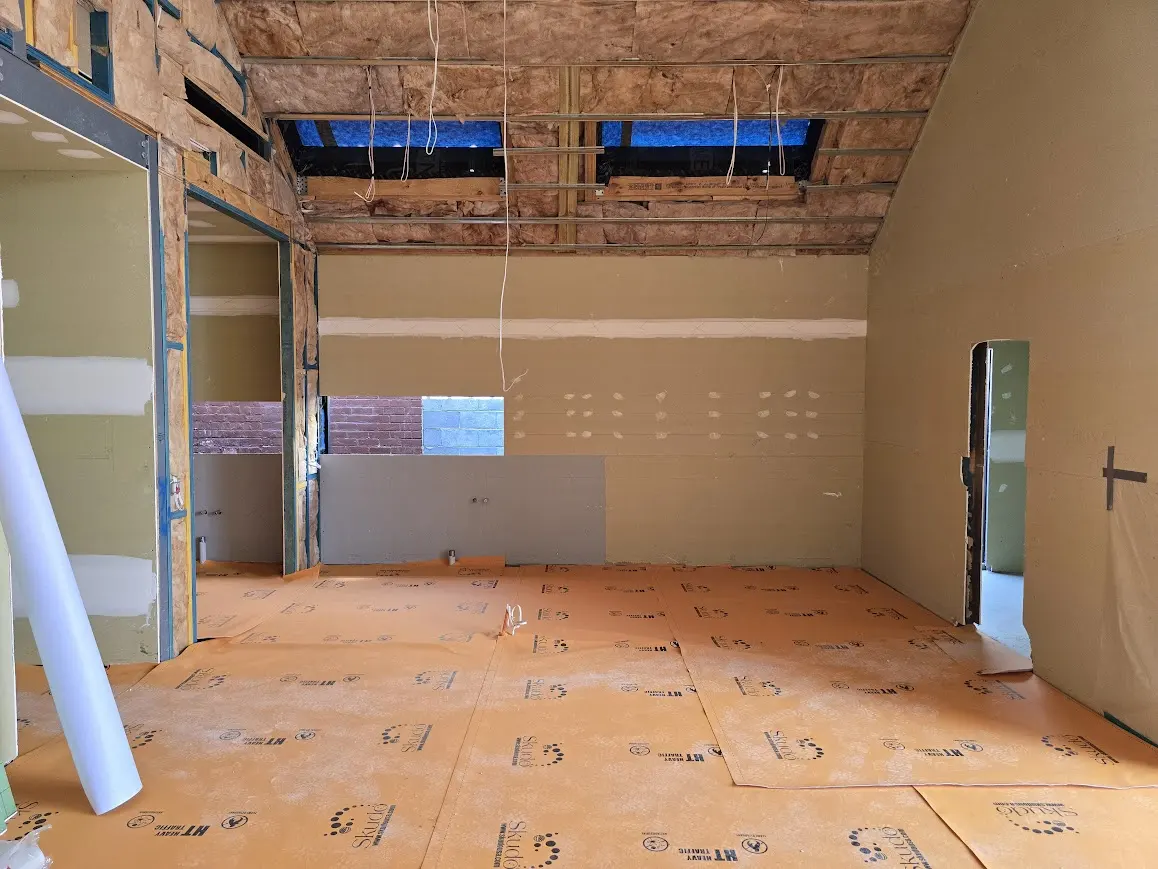
Starting construction is one of the most exciting moments in any project. After months, and sometimes years, of planning and design, the moment you break ground feels like real progress.
But it also marks a shift that many homeowners do not fully anticipate.
Your property stops being your home. It becomes a workplace.
Dozens of trades, suppliers, and professionals will move through the site over the course of the build. From a legal and safety perspective, control of the property transfers to the builder for the duration of the contract. That responsibility is significant. Builders must provide a safe and healthy workplace and manage the site in accordance with the building contract and all regulatory requirements.
Understanding this shift is the first step toward a smooth construction experience.
Several grounding principles define a strong construction partnership.
Transparency is at the top of the list. You should expect clear and honest communication throughout the build. In most professional firms, including ours, the project manager acts as the primary point of contact. They administer the contract and ensure information flows consistently between the construction team and the client.
You should also expect a clear and proven process. Construction is complex, and the difference between a stressful construction process and a smooth one often comes down to how structured the builder’s systems are.
Respect for time is another critical factor. Builders must respect the client’s time and decisions, and clients must respect the time required to plan, coordinate, and execute each stage properly.
Finally, there must be a defined aftercare process. The relationship does not end at handover. A professional builder will have a structured approach to defects, follow-ups, and long-term support.
There is a common myth that contracts only matter if something goes wrong. That mindset creates unnecessary confusion.
The building contract is not a formality. It is the playbook for the project. It defines responsibilities, timelines, payment structures, and the agreed scope of work. When both parties treat it as a reference point rather than a safety net, misunderstandings are significantly reduced.
Builders are legally obligated to execute the contract as written, and a disciplined project manager ensures it is administered properly.
One of the biggest adjustments for homeowners is site access.
It can feel uncomfortable to hand over control of your property, especially if you have lived there for many years. But construction sites operate under strict safety requirements. Unscheduled visits create risk, disrupt workflow, and can compromise efficiency.
That does not mean clients are excluded. Access is typically arranged through the project manager, and regular site meetings are scheduled so clients can stay informed and engaged.
Monthly walkthroughs with the site manager allow for updates and progress reviews. These meetings are not for redesigning the project on the fly. Building decisions are ideally resolved before construction begins to avoid delays and cost impacts.
Variations are one of the most discussed aspects of construction, and understanding them removes a lot of uncertainty.
There are three main types.
Owner-initiated variations occur when the client requests a change to the original scope. This could be anything from altering finishes to adjusting layouts.
Builder-initiated variations usually arise from unforeseen site conditions, regulatory requirements, or documentation discrepancies.
Statutory variations occur when changes are required to comply with updated laws, codes, or permit conditions.
A good builder works hard to minimise variations because they add administrative complexity and can disrupt schedules. Clear documentation and early decision-making are the best ways to avoid them.
Another area that often causes confusion is PC and PS items.
Provisional sums are allowances of labour and materials for work that cannot be accurately priced at the contract stage. Renovations often contain more of these because existing conditions can be unpredictable.
Prime cost items are allowances for fixtures or finishes that the client has not yet selected or may vary in price at the time of order, such as appliances or tapware. Adjustments are made once final selections are confirmed or ordered.
Understanding how these allowances work helps clients maintain control of their budget.
Custom builders typically use staged progress payments rather than the standard schedule designed for volume builders.
Stages may include demolition, foundations, framing, lock-up, internal linings, joinery, fit-off, and completion. Each claim reflects progress on site rather than rigid milestones.
Because building custom homes is dynamic, finishing every element of a stage before moving forward is not always practical. The reasonable person test applies, meaning progress claims are often made when the project has clearly advanced into proceeding stages.
Handover is more than simply receiving keys.
Once works reach practical completion, the builder issues a notice of completion and final claim. The building surveyor provides the occupancy permit or certificate of final inspection.
At this stage, Sustainable Homes Melbourne recommends engaging an independent building inspector to review the project. This inspection provides an additional layer of confidence for homeowners who are familiar with the construction industry.
Following this, a defect walkthrough is conducted with the project manager. Any agreed items are resolved during a short defects period before final handover.
Even after moving in, the relationship continues.
Most builders provide follow-up defect inspections at set intervals because homes naturally settle and respond to seasonal changes.
Statutory warranties typically cover structural issues for six years and non-structural issues for two years, providing long-term protection for homeowners.
Building a home is one of the largest investments most people will ever make. Beyond finishes and aesthetics, the construction process involves coordination, risk management, safety, and quality control.
Delivering a durable, high-quality home requires managing people, schedules, materials, environmental impacts, and community relationships. It is both a technical process and a human one.
Understanding what to expect from your builder helps you navigate construction with confidence and clarity.


