.svg)

How We Transformed a Cold, Leaky Double Brick Home in Coburg North
transforming a mid-century build From 3.1 to 6.1 NatHERS Stars
How SHM improved a Coburg North double brick home from 3.1 to 6.1 NatHERS stars, retaining 90% of the original structure.
Location

home type
energy savings
nathers

ach @ 50pa
budget

There's a type of home you find all across Melbourne's inner north that we genuinely love to work on. The mid-century double brick. Solid as anything. Full of character. And usually, absolutely freezing in winter and an oven in summer.
This one, a cream clinker brick home in Coburg North near the beautiful parklands of Merri Creek, was no exception. A pre-renovation blower door test recorded a whopping 27.7 air changes per hour at 50 Pascals — the NCC target is under 10ACH. The NatHERS star rating came in at a miserable 3.1 stars.
A young family — an environmentally conscious couple with two toddlers who love their Coburg North community, their proximity to Merri Creek, and their local schools — asked us to turn it into something they could live in happily for the rest of their lives.
We got it to 6.1 NatHERS stars and 7.4 ACH. While keeping over 90% of the original structure. Here's how.
What This Coburg North Home Had Going For It
Before we talk about the challenges, it's worth saying clearly: this was a home worth fighting for.
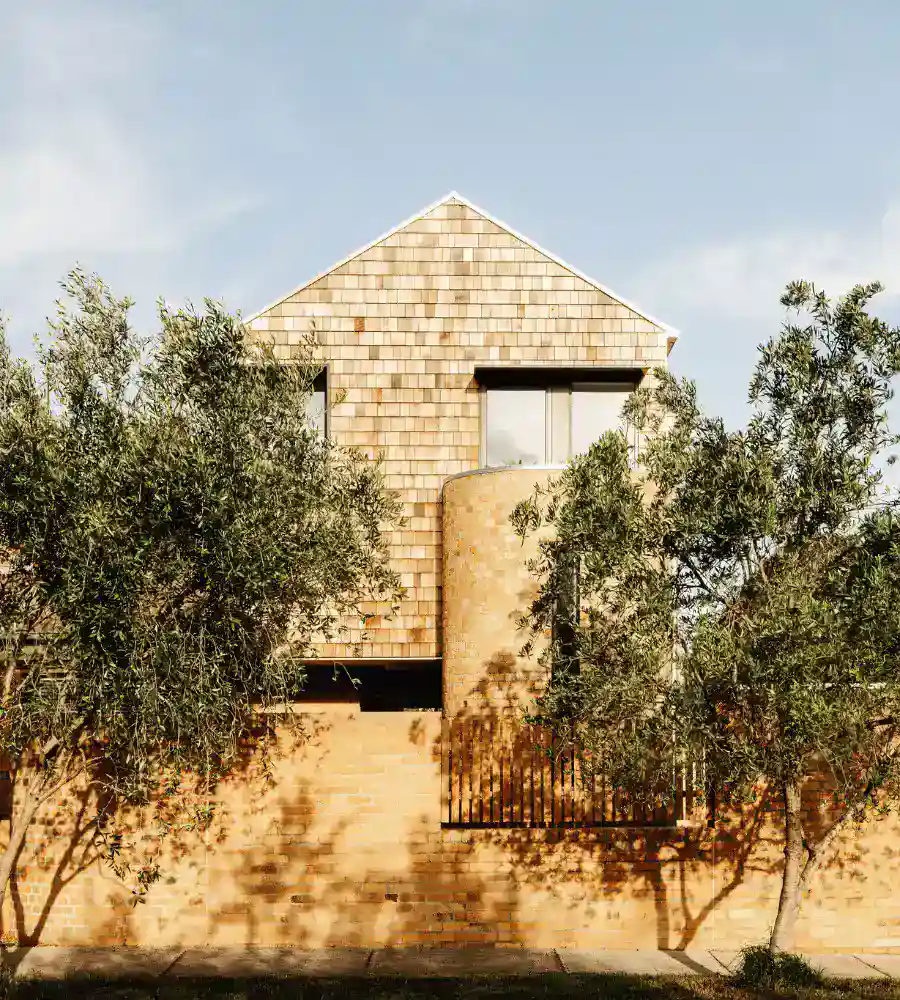
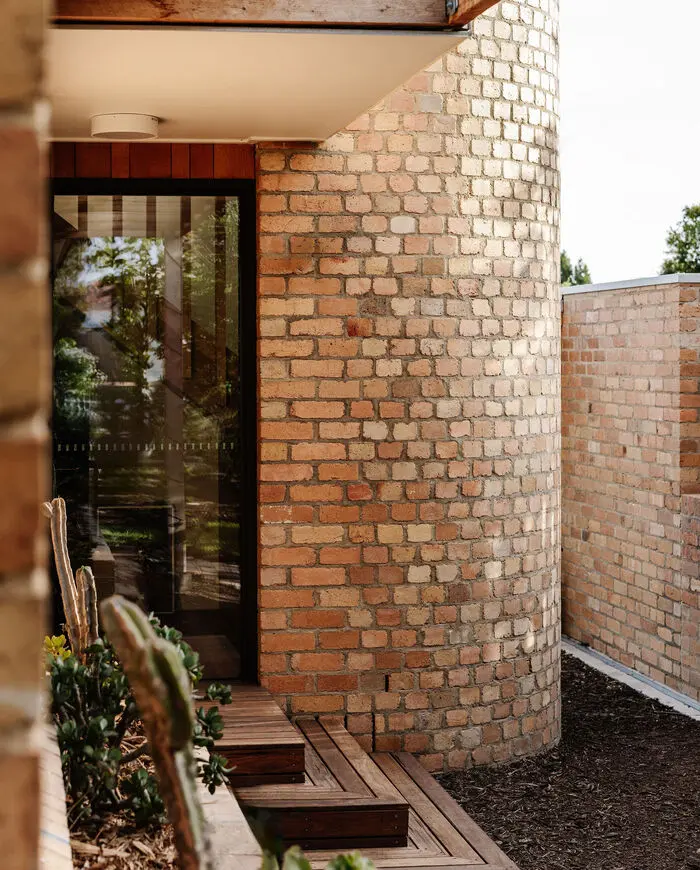
It sat on the corner of a quiet cul-de-sac with a genuinely welcoming street presence. The cream clinker brickwork had the lovely charm of Melbourne's early post-war heritage — that slightly handmade quality you just can't replicate with modern materials. The slimline steel windows, original to the 1950s, gave lovely views of the garden with a minimalist character that's become sought after again. The foundations were in excellent condition.
Our clients weren't looking to sell and move somewhere easier. They wanted to stay in their community, in their home, and make it work properly. That's the brief we love.
The Challenges: A South-Facing Double Brick Home with No Insulation
Orientation. North to the front is the most challenging orientation for passive solar design. The main living spaces face the wrong way. It limits what you can achieve through orientation alone, which means the building fabric has to work harder.
Double brick walls with no insulation. This is the characteristic challenge of Melbourne's post-war housing. The walls themselves have essentially zero insulation value. A lot of people talk about blowing insulation into the cavity, but with double brick, if there even is a cavity, it's typically far too tight for any useful result. You need a different solution.
Single-glazed steel windows. Original single-glazed steel windows are a major source of heat loss. The complication: the 1950s installers had welded these frames directly to the steel lintels above. Replacing them outright wasn't an option.
Barely any insulation anywhere. Some remnants in the ceiling. Nothing under the floor. Nothing in the walls. Starting at 27.7 ACH tells the full story.
The Design Brief: A Forever Home for a Family of Four
Transform a cold, leaky 2-bedroom, 1-bathroom home into a comfortable, sustainable forever home for a growing family — without leaving the neighbourhood they love. Four bedrooms, two bathrooms. Spacious but not wasteful. And a considered approach to the street: the corner position was an opportunity, and we weren't going to waste it.
The Design Solution: A Zoned Extension and a Very Limited Demolition Plan
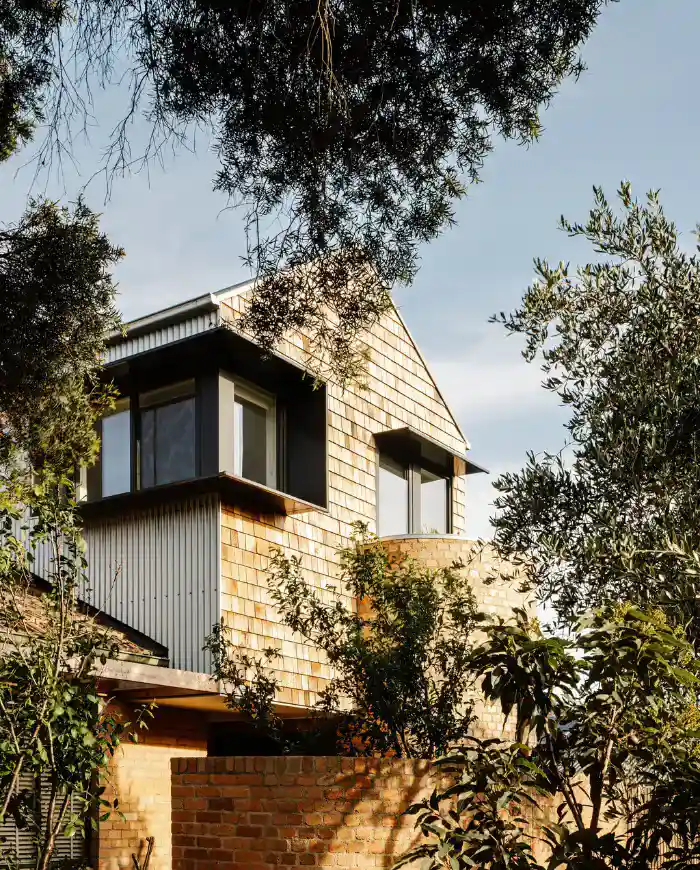
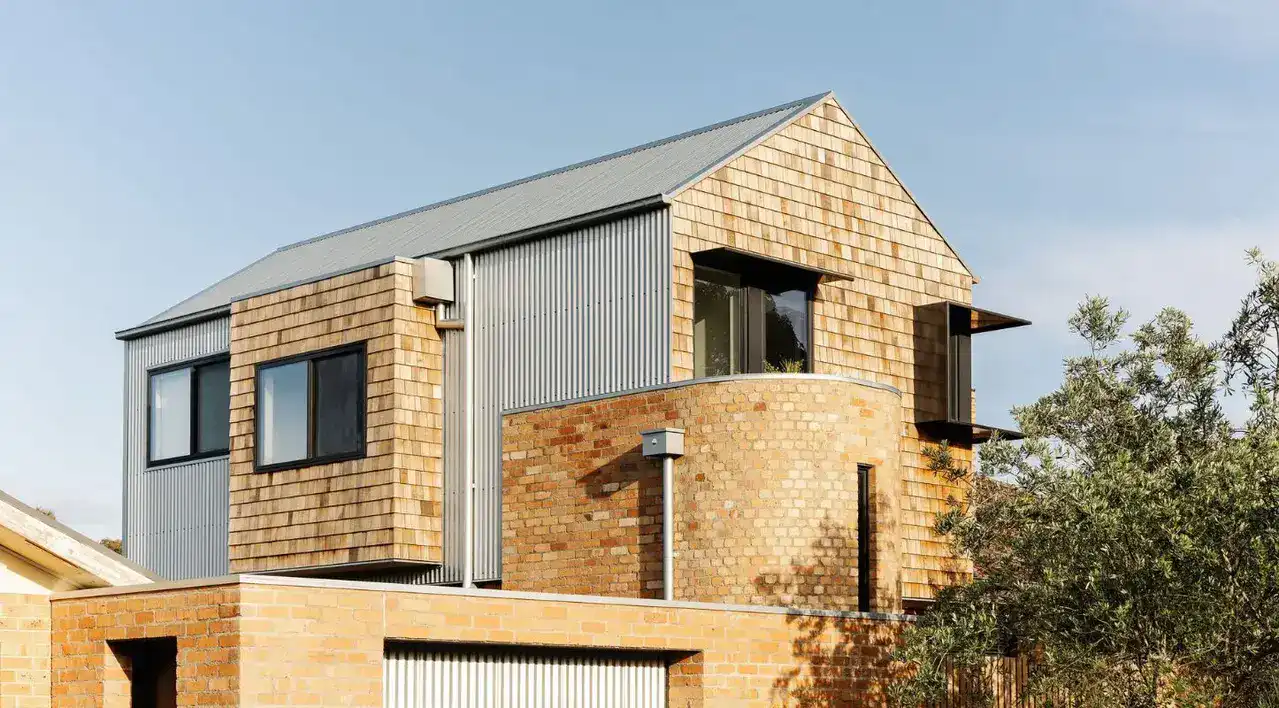
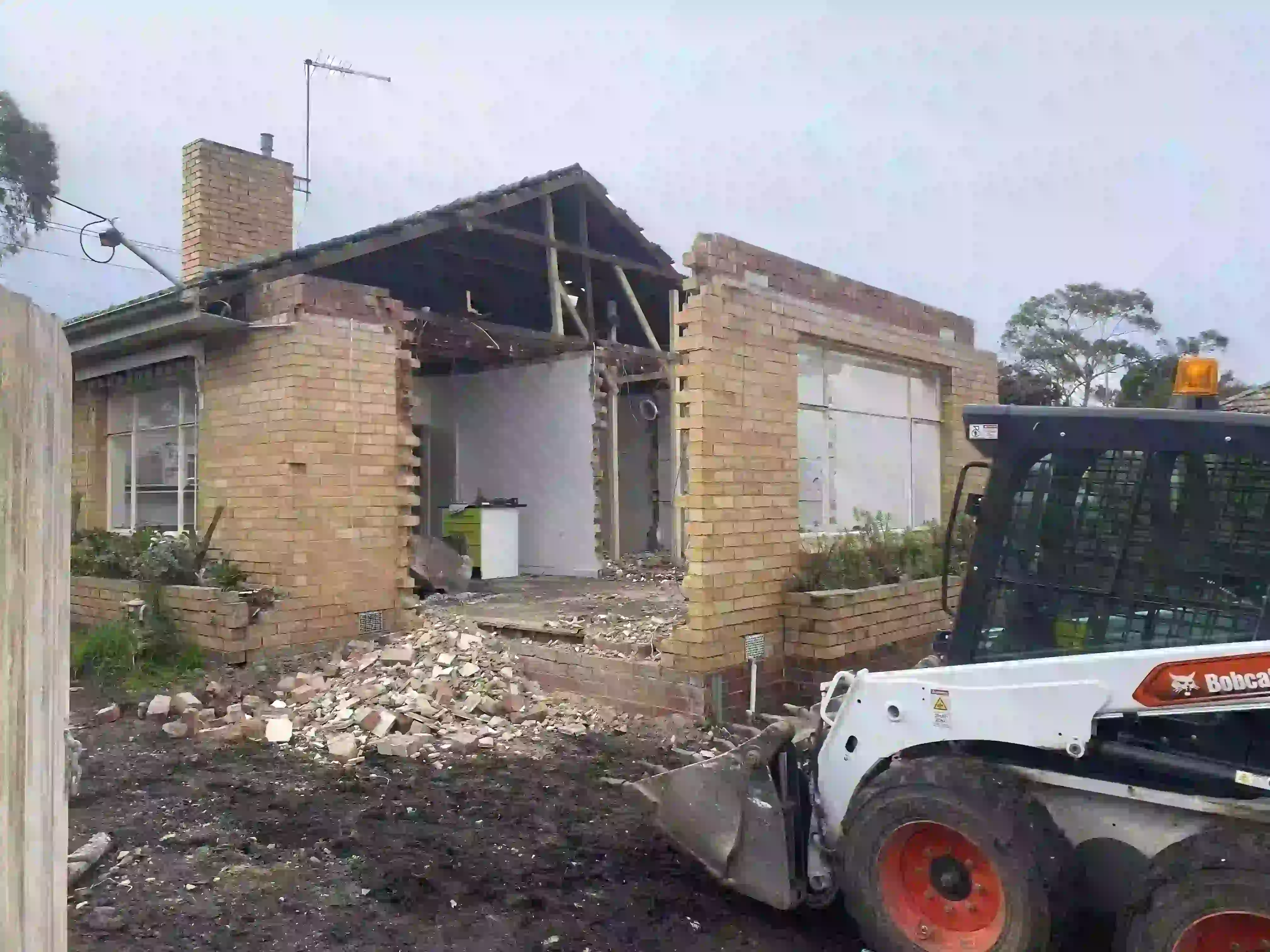
We designed a two-storey extension to the south, deliberately contained to a limited footprint. This kept the demolition plan minimal, which mattered both for budget and for embodied carbon. We kept nearly all of the existing brick walls intact.
The staircase is zoned on the west side of the home. We know open-plan staircases look great in magazines, but they are genuinely terrible for thermal comfort and energy efficiency in Melbourne's climate. Hot air rises straight up. A zoned staircase keeps the thermal zones of the home working properly.
The first-floor extension includes a daybed area positioned to capture city views and the nightly bat migration over Merri Creek — the kids are obsessed with it. And in place of the original rooftop bath, we installed a green roof.
How We Got a 1950s Double Brick Home to 6.1 NatHERS Stars
The Extension: Our Standard High-Performance Wall System
For the new extension, we used our standard 140mm stud wall system with a ventilated cavity. The cladding is zinc corrugated iron: durable, zero-maintenance, and self-shading. We also applied beautiful western red cedar shingles to the facade — a material we never get tired of working with. First-floor ceilings were kept pitched to promote natural cooling.
Spec: R6.0 ceiling batts, ProClima Mento as the roof weather-resistant barrier, and Rylock double-glazed aluminium windows throughout.
The Existing Home: Solving the Double Brick Insulation Problem
The solution: 60mm Kingspan K17 Kooltherm insulated plasterboard applied internally to all external walls. This achieves R2.35 — a genuine transformation from effectively zero. Going from no insulation to R2.35 on a double brick wall is not a small thing. That is the single most impactful upgrade you can make to this type of Melbourne home.
The Steel Windows: A Problem That Required Lateral Thinking
Our original plan was to remove and replace with double-glazed aluminium. It turned out the 1950s installers had welded the frames to the steel lintels above. Replacement wasn't happening.
So we left the frames in place, removed the single-glazed units, and had Quinn's Painting sandblast and repaint them to match the new windows. Before that, we had the old glazing putty tested for asbestos — it frequently contains it. The test came back negative. We then installed double-glazed units into the restored frames. The result: mid-century steel windows that retained all their original character and are now genuinely double-glazed.
Ceiling and Underfloor Insulation
Ceiling: R6.0 batts throughout, with IC-rated fittings at all penetrations.
Underfloor: We removed the floorboards, found and straightened a few compromised bearers and joists, installed R2.5 polyester batts, then laid chipboard topped with recycled Messmate flooring sourced from Timber Revival. A solid, well-sealed, beautiful floor.
The Result: 3.1 Stars to 6.1 Stars, Keeping 90% of the Original Home
Before renovation: 27.7 ACH at 50 Pa · 3.1 NatHERS stars · Cold, leaky 2-bedroom, 1-bathroom home.
After renovation: 7.4 ACH at 50 Pa · 6.1 NatHERS stars · Comfortable, sustainable 4-bedroom, 2-bathroom forever home · 90%+ of the original structure retained.
We didn't knock this home down and start again. We worked with what was there — the double brick, the clinker character, the steel windows, the foundations — and brought it up to a standard that most new construction in Australia doesn't reach. That is what a well-executed renovation of Melbourne's mid-century housing stock looks like.
project at a glance
performance
before
after
After renovation, we completed a post-occupancy NatHERS thermal shell assessment using FirstRate5. The result: 6.1 stars — up from 3.1 before we started. A post-renovation blower door test recorded 7.4 ACH at 50 Pascals, down from 27.7. The NCC target is 10 ACH. We finished below it, in a mid-century double brick home that started at nearly three times the limit.
Over 90% of the original structure was retained. The cream clinker brick facade, the original steel window frames, the timber sub-floor — all kept, all upgraded, all preserved. This is now a 4-bedroom, 2-bathroom sustainable family home built to perform for the next 50 years.
energy & carbon
0
kwh

solar capacity
battery kwh

0
~960
%201.svg)
annual energy savings ($AUD)
3.3
%201.svg)
CO₂/saved per year (tonnes)
1

equivalent cars removed CO₂/YR
What This Means for Melbourne's Inner North
There are thousands of homes like this one across Coburg, Brunswick, Preston, Northcote, and the broader inner north. Mid-century double brick. South-facing. No insulation. Single glazing. Cold, expensive to run, and genuinely uncomfortable. Most of their owners don't realise what's possible.
With the right team, the right approach, and a clear brief, you can take a 3.1-star, 27.7 ACH double brick home in Coburg North and make it a 6.1-star, 7.4 ACH sustainable family home — while keeping the cream clinker, the steel windows, the neighbourhood character, and almost every brick of the original structure.
This is what's possible. We hope it's useful to anyone in Melbourne sitting in a cold, draughty mid-century home wondering whether it's worth the effort. It absolutely is.
Sustainable Homes Melbourne has been renovating Melbourne's mid-century and heritage homes since 2014. If you're in an older Melbourne home that's cold, expensive to run, or not working for your family, get in touch with our team to find out what's possible on your property.